
Need more detail before choosing?
Review fit, scope, inputs, review points, responsibilities, and the complete handoff after comparing the package options.
The problem this service solves
An image can look correct on screen while creating doubled paths, fragile bridges, excessive nodes, trapped negative space, or confusing layers in production. SVG quality depends on the target machine, software, material, scale, and editing expectations—not the file extension alone. Input quality means naming the intended action: resize, recolor, personalize, cut, engrave, score, print, or hand to another editor. The target software version, machine if relevant, material, output dimensions, minimum feature, layer or color logic, and operator experience affect what must be simplified or separated. A screenshot or raster reference may communicate appearance but cannot establish clean source geometry, ownership, or the construction needed for production.
Good fit / not a fit
Good fit
- You know the intended editing, cutting, engraving, or print workflow.
- You need original vector geometry with an organized layer and export plan.
- You can provide target software, machine, material, and minimum-size context when relevant.
Not a fit yet
- You need guaranteed compatibility with every machine, material, software version, or operator setting.
- You want copyrighted art or a marketplace competitor’s cut file traced.
- You need a painterly image or complete apparel concept rather than vector engineering.
Scope and handoff
Deliverables
- A vector brief naming target use, software, machine, material, scale, and layer needs.
- Original vector composition with deliberate path, bridge, and negative-space decisions.
- Organized layers and naming appropriate to the approved editing workflow.
- Agreed SVG and companion export formats prepared to the confirmed specification.
- A test note describing checks performed and conditions that were not tested.
- A layer and object manifest identifying master artwork, cut or print groups, personalization fields, compound paths, editable text treatment, and companion exports.
- A node-level QA view showing representative joins, counters, bridges, overlaps, open-path checks, and minimum-detail decisions at the scoped output size.
Exclusions
- Universal machine, software, material, or scale compatibility.
- Physical production, test materials, shipping, or device troubleshooting unless expressly scoped.
- Unlicensed tracing, logo cleanup without authorization, or legal clearance.
- Apparel strategy, mockups, listings, or broader illustration not named in scope.
How the work is approached
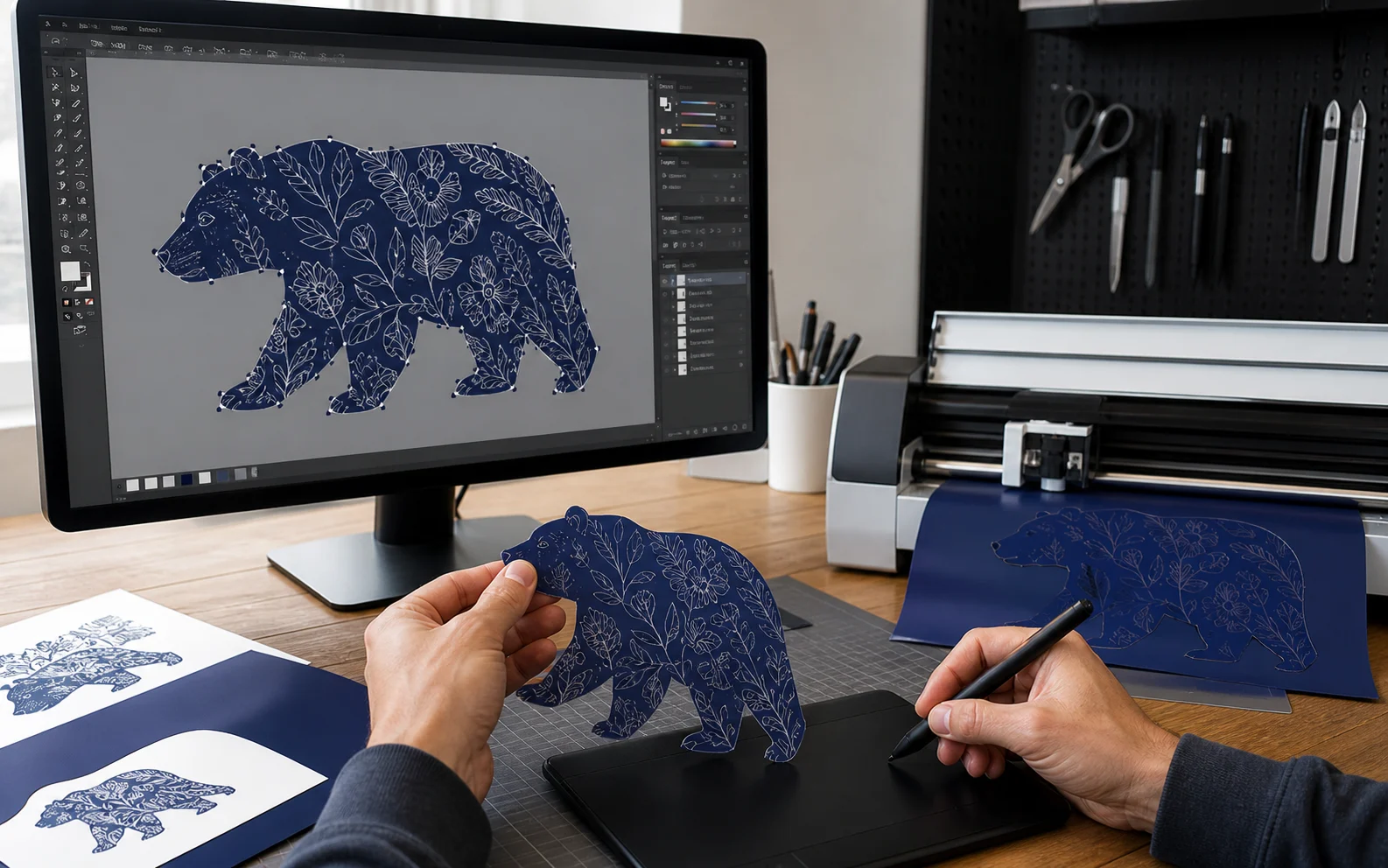
Prinil builds the vector around the intended workflow, simplifies nodes without flattening necessary character, checks closed paths and overlaps, protects bridges and negative space, and organizes layers for the person who will edit or produce it. Physical cut evidence is described only when a real test occurred. Geometry is reviewed at the smallest named output as well as enlarged at node level. QA looks for stray points, open paths, duplicate shapes, unnecessary clipping masks, accidental fills or strokes, self-intersections, fragile islands, trapped counters, overlapping cut lines, inconsistent winding, and text that depends on an unavailable font. Layer names and color groups reflect the approved operator workflow rather than the designer’s private working history. Import or cut tests, when included, record the file version, software, machine, material, size, settings supplied for context, and observed result. A passed test is evidence only for those conditions. If a requested personalization, material change, or smaller output breaks bridges or legibility, the exception returns with the affected geometry and available choices instead of being labeled universally compatible.
From intake to handoff
- Name the production context — Record the intended action, target software, machine, material, output sizes, color or layer behavior, personalization needs, companion formats, and operator expectations. The brief also identifies source ownership and whether supplied raster art requires cleanup, reinterpretation, or a new design rather than automatic tracing.
- Engineer the geometry — Build original paths with deliberate nodes, joins, bridges, counters, negative space, separation, and layer naming. The construction follows how the file will be selected, recolored, cut, engraved, printed, or personalized. Decorative complexity is removed only when the production reason and visual tradeoff are understood.
- Inspect and test — Review at minimum size, inspect layers and paths, run the scoped digital checks, and document any real import or physical test with its exact file, software, machine, material, size, and conditions. A failed import, fragile feature, or changed material is logged as an exception requiring repair, simplification, or owner acceptance.
- Export with limits stated — Deliver the approved master, SVG, companion formats, object or layer manifest, and test note. The handoff names editable text treatment, personalization instructions, software assumptions, tested context, checks not performed, and remaining compatibility limits so the next operator can distinguish a verified condition from a general expectation.
Rights, access, and security
The written agreement covers original artwork rights, permitted products and uses, authorized client inputs, editable-file inclusion, personalization rights, portfolio permission, and any third-party font, stock, or template license. A client-supplied logo or image is converted only when the client can authorize it; tracing a public image does not create permission. Files are transferred through the approved project channel with the master and exports clearly distinguished. No marketplace password, cutting-machine login, device credential, payment information, or customer list is necessary for design delivery.