
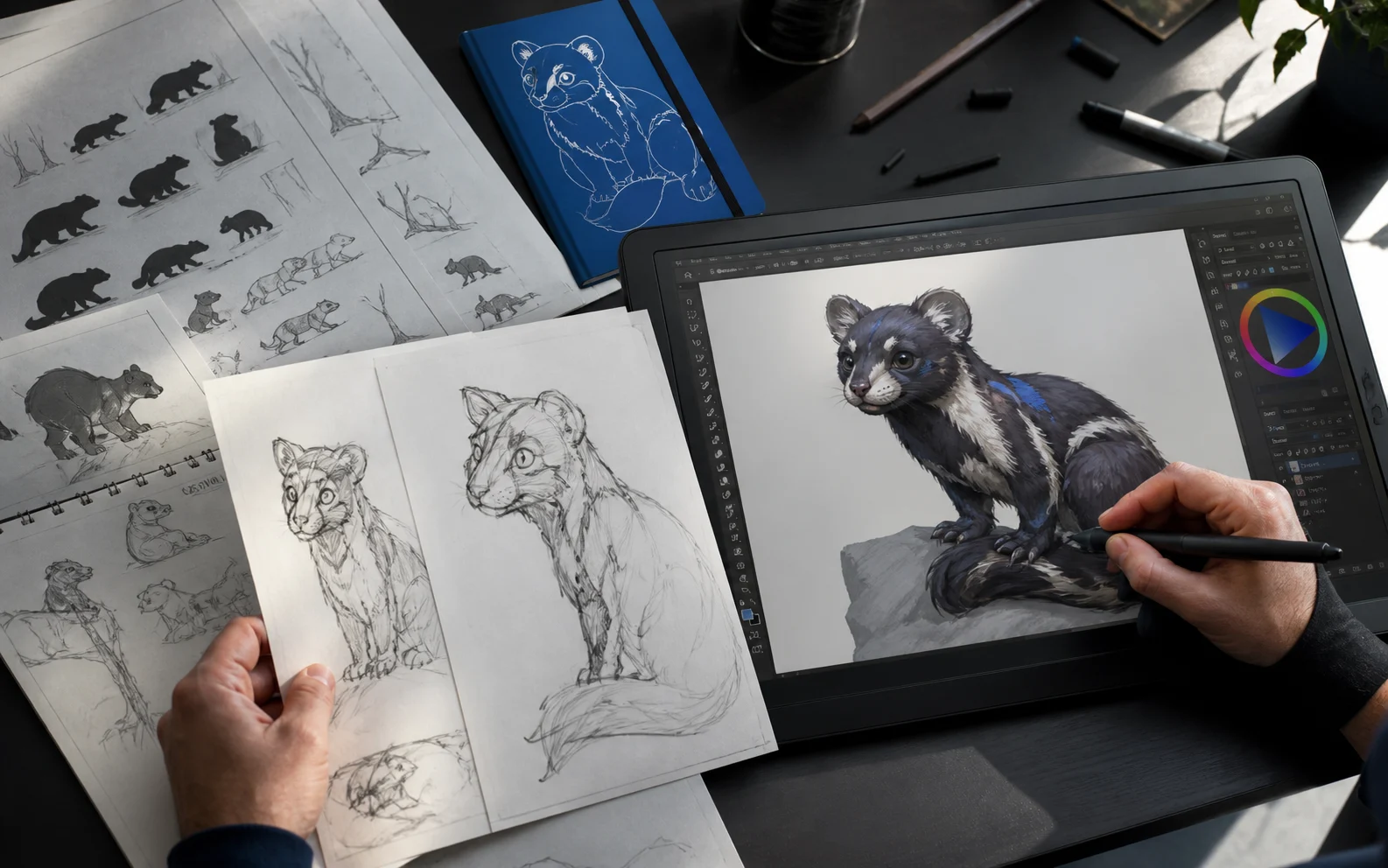
These services overlap, but they solve different primary problems. Start with where the asset will be used, what must be recognized, how it will be produced, and who needs to edit it next. Then scope the creative and technical work that follows.
Production requirements differ by product, printer, machine, material, software, and platform. Confirm the current specification for the intended workflow.
Order Custom T-shirt Design for an apparel-first problem
Choose this scope when the buyer should recognize a phrase, identity, occasion, or visual signal on a garment. The designer considers listing-thumbnail reading, garment color, print area, typographic hierarchy, image weight, and the confirmed print specification together.
The deliverable can include illustration or vector elements, but the central test is whether the composition works as apparel. It does not automatically include niche research, listings, uploads, mockups, or source files.
- Buyer recognition.
- Garment context.
- Apparel hierarchy.
- Agreed print files.
Order Custom Illustration for a broader image-making problem
Choose illustration when an original image, character, scene, metaphor, or reusable asset system is primary and it may appear across products, editorial uses, packaging, campaigns, or brand material. Art direction begins with the communication problem and application.
The final file may be raster or vector depending on the approved visual language. Being vector does not by itself make an illustration suitable for a cutting machine or guarantee that it will read on a shirt.
- Original image concept.
- Art-direction routes.
- Application-aware composition.
- Defined rights and variants.
Order Custom SVG Design for an engineered vector workflow
Choose SVG when clean paths, sensible layers, scalable geometry, editing, cutting, engraving, or path behavior is the main requirement. The brief should identify the target software, machine, material, output size, layer expectations, and any real test included.
An SVG can still be poorly constructed, and no file can be guaranteed across every machine, material, setting, software version, and operator. The handoff should state what was checked and what remains untested.
- Path quality.
- Layer and naming structure.
- Negative space and minimum detail.
- Stated compatibility limits.
A single project can contain more than one scope
An illustrated shirt may need an illustration phase followed by apparel composition. A design intended for print and cutting may need a primary composition plus an SVG adaptation. Define the review point between phases so a technical conversion does not hide a new creative decision.
The quote should state the concept routes, applications, final formats, source files, production checks, revisions, rights, and exclusions for each part. Avoid assuming one fee or deliverable includes every downstream use.
- Creative phase.
- Application phase.
- Technical production phase.
- Separate approvals and handoffs.
Use four questions to choose
Ask what the buyer must recognize, where the art will appear, how it will be produced, and who needs to edit or operate it next. If buyer-on-garment recognition dominates, start with T-shirt Design. If original image-making dominates, start with Illustration. If path and production behavior dominate, start with SVG.
If you still cannot choose, describe the bottleneck in the quote request without selecting a service. Do not send credentials or private account data; the first useful step is a scope decision.
- What must be recognized?
- Where will it be used?
- How will it be produced?
- Who needs the next handoff?